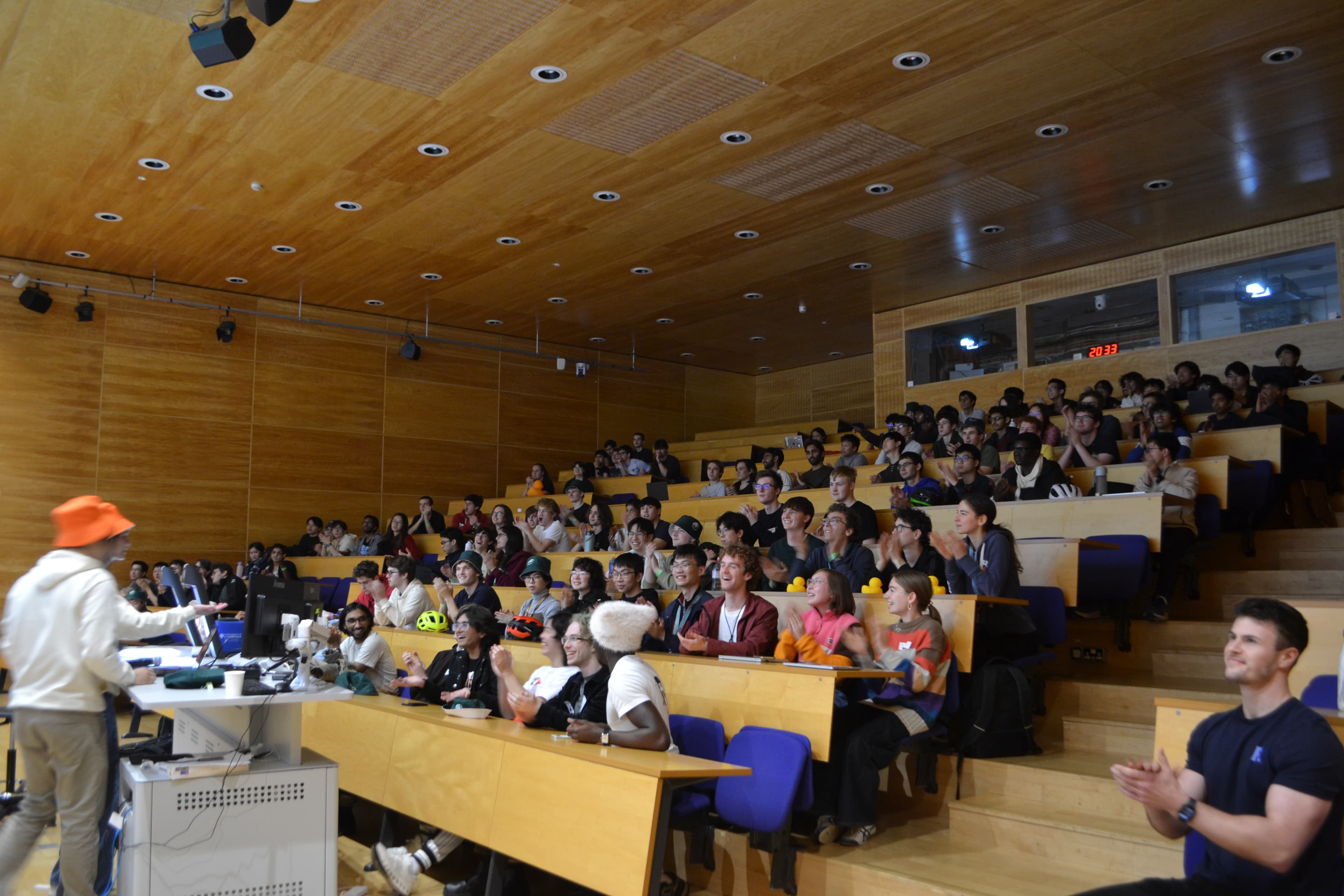
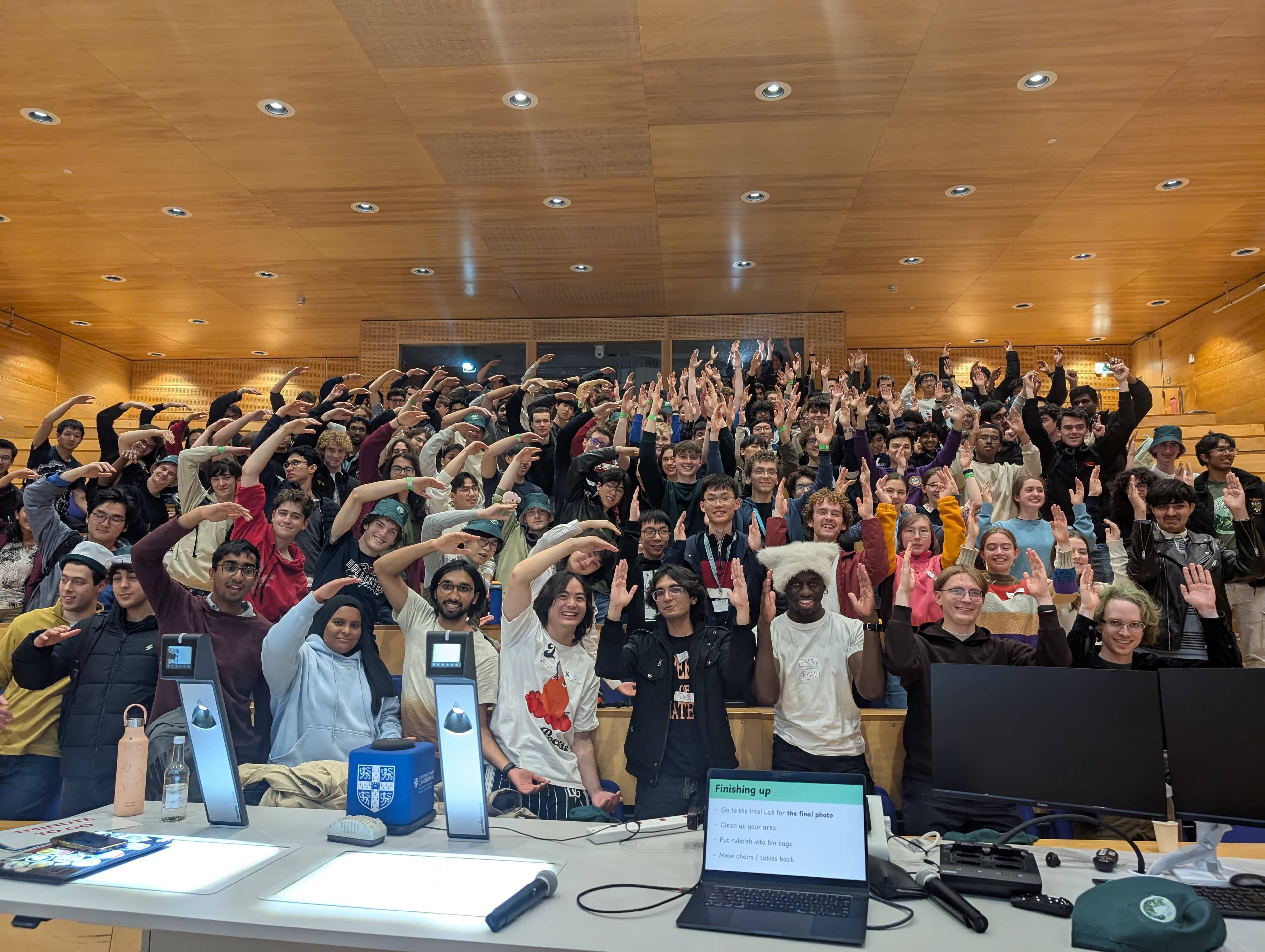
After posting about CamHack, a few people asked how we pulled it off — specifically, how we managed to make it feel so different from the usual hackathon.
The short version: ~300 students, 30 hours, one theme (Unintended Behaviour), and a deliberate decision to optimise for chaos rather than polish.
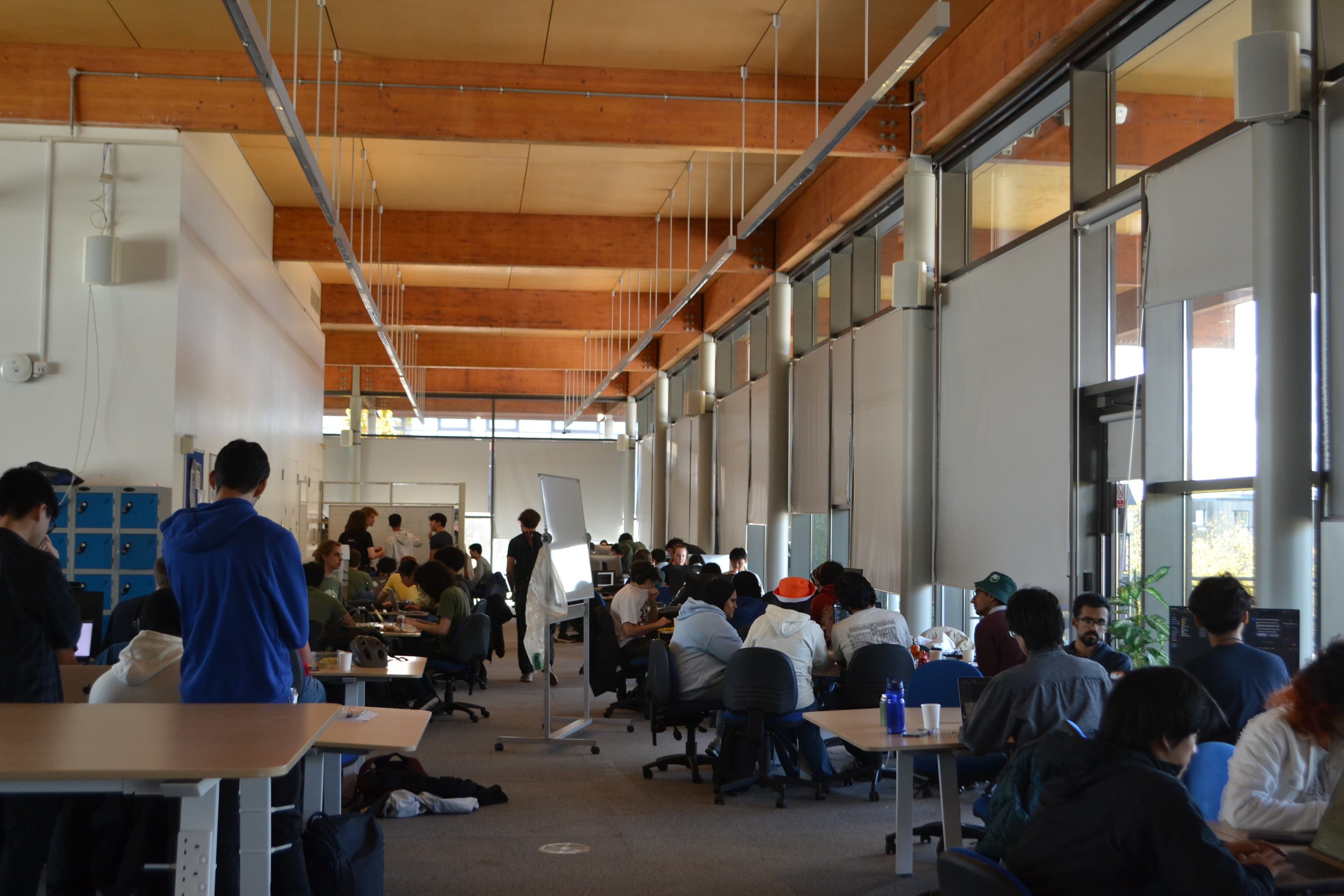
I'm not suggesting this is the only way to run a hackathon — career-focused events have their place. But CamHack was an experiment in doing things differently, and it worked. This is a breakdown of the philosophy behind the event, and why being broke might actually be a feature, not a bug.
The Motivation: Escaping the Corporate
Most hackathons I'd attended were polished, heavily sponsored and kind of boring. They felt less like creative jams and more like recruitment events disguised as hackathons.
The atmosphere at those events often feels transactional. You're there to pad your CV; the sponsors are there to hire you (or screen candidates). This results in projects that play it safe.
We wanted to create a space for people to build things just for the sake of building them; to remove requirements for 'utility' or 'business viability,' letting people go all out with whatever random skills they had to make something fun.
That was the core pillar of the CamHack philosophy: Keep it non-corporate and about the projects.
The Theme: Why "Useless" is Useful
Hackathons should be about the process of making, not just the final product. To ensure people actually enjoyed that process, setting the right theme was crucial.
My theory of hackathon themes is that they need to satisfy three criteria:
- Allow significant room for creativity.
- Be well-specified enough that people actually know what you mean.
- Be as non-corporate as possible (often meaning useless).
We landed (after a lot of deliberation) on Unintended Behaviour. It's specific enough to spark ideas — using chess.com as cloud file storage by encoding data as chess moves, porting DOOM onto things that really shouldn't run DOOM, using Spotify as a calculator — but broad enough that you could take it in a hundred different directions. And crucially, it's almost impossible to build something corporate around "unintended behaviour." The theme itself gives people permission to go wild.
Setting the Vibe
A non-corporate atmosphere doesn't just happen by accident. Here are some tactics we used to 'set the vibe'.
- Guerrilla Marketing: We wanted to show, not just tell, that we were here to have fun. Before the event, we hid a thousand rubber ducks with CamHack stickers all around the university/city. It sounds silly, but this was surprisingly key for breaking the ice.
- The Opening Ceremony: This is the most critical moment. It's the only time you have the attention of all the participants, and it sets the trajectory for the next 30 hours. The goal here is simple: signal that the event is for fun and that the organisers are approachable. We scrapped the motivational speeches for a slide titled "Why Bother?" (explicitly giving permission to build something dumb) and introduced the rules as "The part where we pretend to be professional." We told participants to spot the committee by the "stressed look on our faces."
- Organiser Roaming: The organisers spent the event walking around the tables, asking questions and having conversations with the participants. This helped us ensure that people were actually having a good time and felt like we cared about their projects.
Project Examples
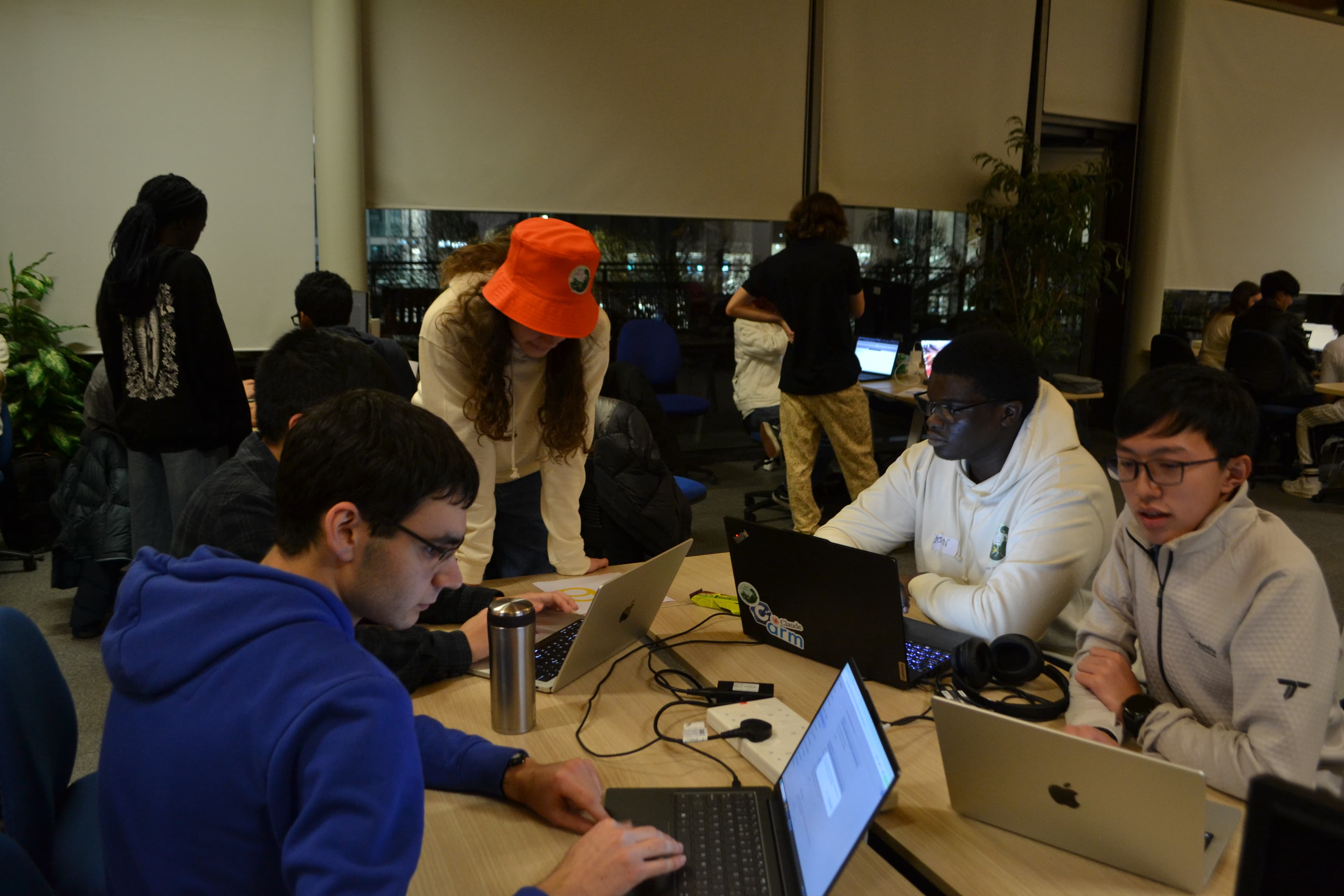
What surprised me most was the consistency. At most hackathons, you get a few standout projects in a sea of generic wrapper apps. Here, almost everything was genuinely good — inventive, technically impressive, and conceptually hilarious. Some highlights:
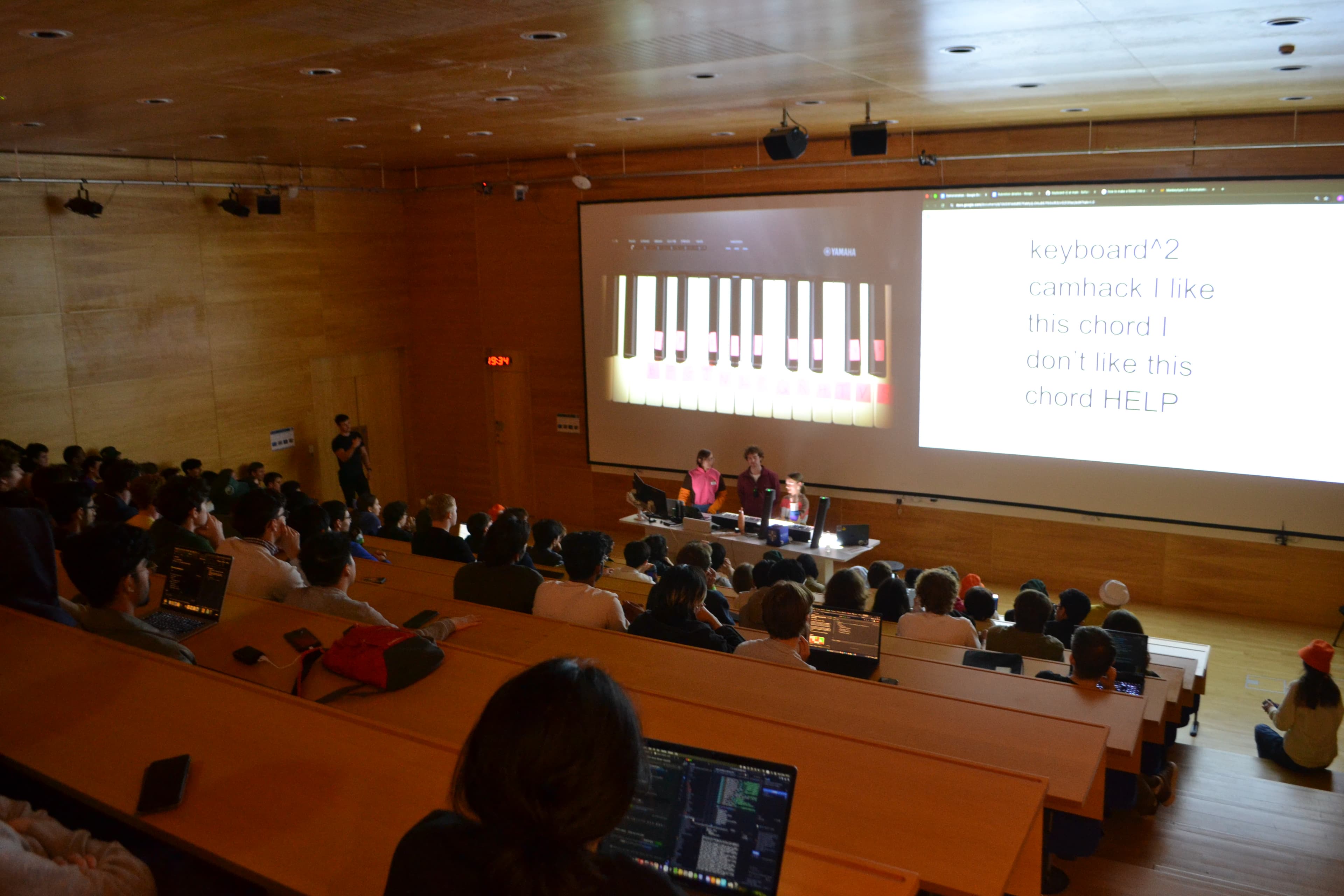
- Keyboard²: Imagine writing an essay by playing a concerto. The team built a piano that literally types, mapping English letter frequencies to specific chord progressions. If you play legato it types words; if you add dynamics, it capitalises. It turned the mundane act of typing into a music performance.
- The Mis-Interpreter: A transpiler from hell that takes clean C code and mutilates it into valid Python, Scratch, Excel formulas, Minecraft commands and Mindustry commands.
- Doom Scrolling: The most literal interpretation of the term possible. They replaced every colour in the original 1993 DOOM colour palette with a looping TikTok video. They wrote a real-time shader to run this at 75fps, controlled entirely by "scrolling" gestures. A technical masterpiece of brain rot.
You can see the rest of the projects here: https://cam-hack-2025.devpost.com/project-gallery.
Budget: How to Survive (and Thrive) on £10k
Running an event for ~300 people on £10k comes out to about £33 per head. For a 30-hour event, that is incredibly tight. Pulling this off without starving anyone required some serious logistical gymnastics, and all credit goes to the rest of the committee for pulling off that financial wizardry.
Here is how we made it work, and why the lack of funds might have actually helped the culture:
- Food (~£6k): We provided 4 meals (2x lunch and 2x dinner) along with an assortment of snacks and refreshments throughout the event. Lunch on day 1 was from a burrito chain and lunch on day 2 was pasta from a local pasta shop called Maccaruna. We ordered pizza for both dinners. We bulk ordered a lot of the snacks on Amazon and did a small grocery haul on the day.
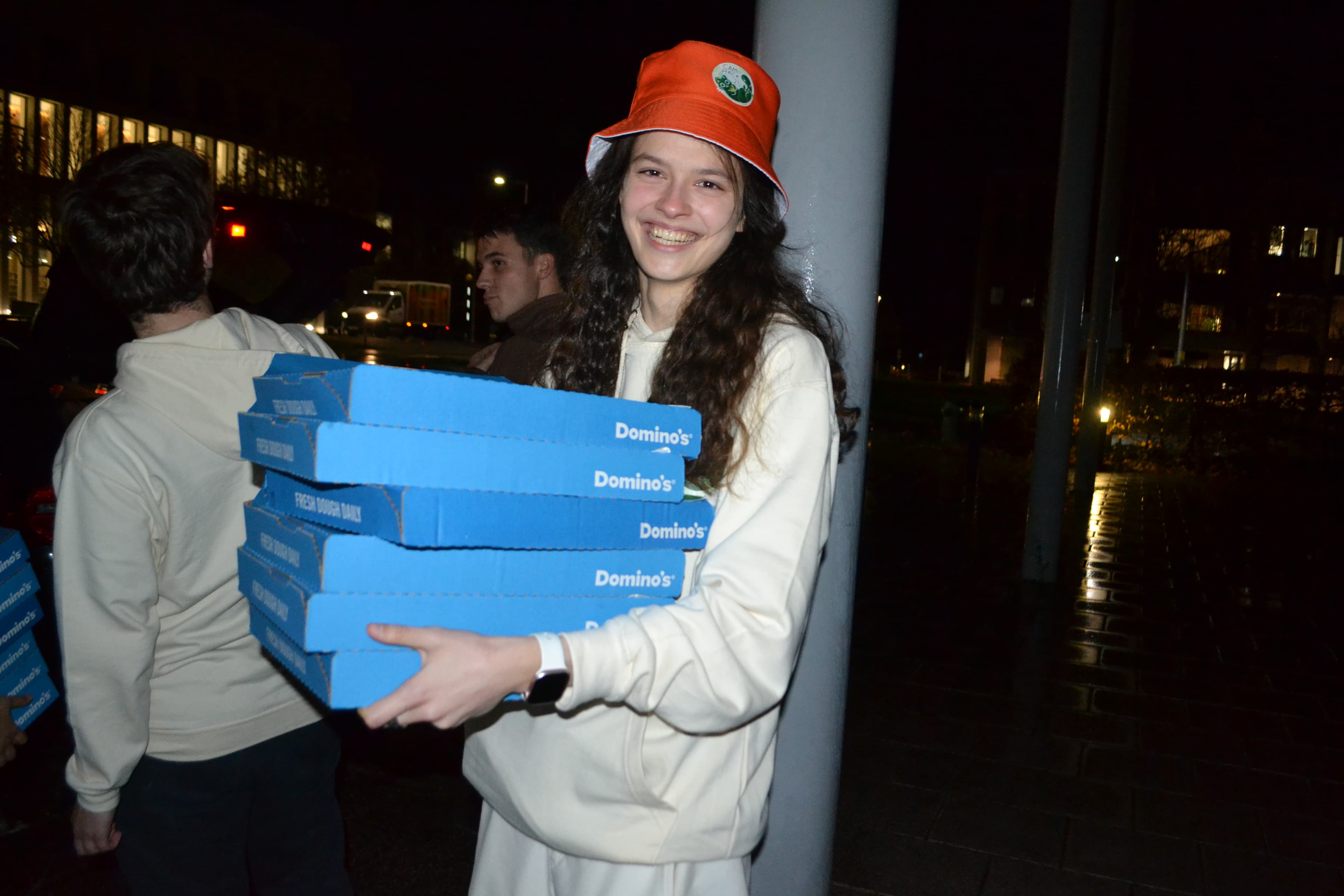
- Merch (~£3k): We put a lot of thought into getting the cheapest possible merch. We ended up skipping t-shirts for bucket hats — reasoning people wouldn't want low-quality shirts anyway — and branded mugs, which were surprisingly cheap and popular.
- Prizes (~£1k): We intentionally kept these small, and let people choose from a range of options.
- Venue (Free): Fortunately, we were able to use the Computer Laboratory for free.
The point of highlighting this isn't just to show off our budgeting skills. It's that constraining the rewards actually elevated the hackathon. When you remove the high-stakes cash prizes and the mountain of branded merch, you stop attracting people who are just there to extract value. By keeping the prizes small, we ensured the event was about the projects, not the payout.
What We Would've Done Differently
Of course, when you run on a shoestring with a small team, things break. Next time we would:
- Start judging earlier and allocate extra buffer time.
- Start on Friday evening instead of Saturday morning to give people more time.
- Get healthier food (there's way too much pizza at compsci events).
Miscellaneous Advice
A few opinionated bits of logistical advice.
- The Gigasheet: We lived and died by a single massive spreadsheet. It contained a checklist of 50+ tiny tasks that needed to be done before the hackathon started, sorted by deadline.
- Delegate, don't micromanage: Put a lot of work into choosing the committee, and once you choose them, trust that they'll get stuff done. A fortnightly meeting to check that people aren't blocked and know what they need to do is sufficient.
- Keep the core committee small: A small committee reduces the difficulty of organising meetings. We found that a core committee of 5—7 is the sweet spot.
- Reduce the number of corporate tracks: One major factor in keeping the vibes non-corporate was the lack of corporate tracks. You want everyone to be competing primarily for the main track.
- Small details that help: We wore bright orange bucket hats so we were instantly recognisable in the chaos. We also used Luma for admin, which made on-the-day check-in smoother.
Closing Thoughts
Sometimes money gets in the way. By removing the corporate gloss, we removed the pressure to be impressive, and replaced it with permission to just build something fun.
A note to organisers: You have to have fun. If you aren't excited about the chaos you've created, there's no point. The energy of the room starts with you.
If you're thinking of running something like this, don't worry about making it professional. Give people a theme that makes them laugh, keep them fed, and get out of the way.
Huge credit goes to Co-Lead Uliana Ronska and the committee — Oliver Greenwood, Athena Eng, and Jadon Mensah — for their amazing work in bringing this event to life.